Reading French hallmarks: the Minerva head, the eagle's head and the maker's mark
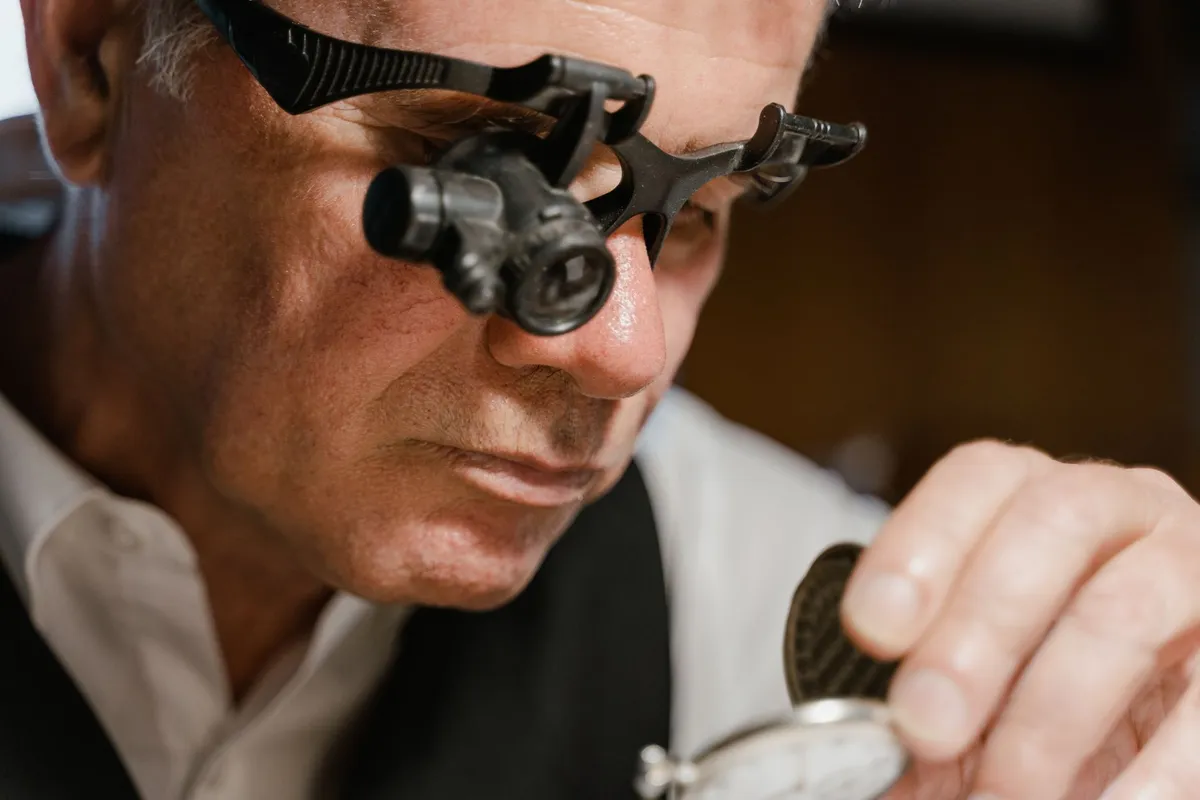
Turn over a French silver spoon or look inside an old gold ring and you will often find tiny stamped figures: a woman’s profile in a helmet, a bird’s head, a lozenge with initials. These are hallmarks, and France has one of the oldest and most codified systems in the world. Learning to read them takes a little practice and a good magnifying loupe, but it tells you a great deal about what you are holding.
Why hallmarks exist
Silver and gold are almost always alloyed with other metals to make them hard enough to wear. The question for any buyer is simple: how much precious metal is really in this piece? Hallmarking answers it. In France, as in several European countries, precious metal objects have long been tested and stamped by an official assay office before sale, which is why French jewelry and silverware usually carry two kinds of marks:
- a guarantee mark, applied after official assay, which certifies the fineness of the metal;
- a maker’s mark, sometimes called the responsibility mark, which identifies the manufacturer or the business answerable for the piece.
If you want a refresher on what fineness means in practice, our article on sterling silver 925 jewelry explains why pure silver is rarely used.
The Minerva head: French silver
The best-known French silver mark is the head of Minerva, the Roman goddess, shown in profile wearing a helmet. It has been used on French silver since 1838, which makes it one of the longest-running hallmarks still recognised today.
On older pieces, a small number inside the mark indicated the standard:
| Mark | Meaning |
|---|---|
| Minerva with a “1” | first standard silver, 950 parts per thousand |
| Minerva with a “2” | second standard silver, 800 parts per thousand |
Because of its size, the Minerva head is mostly found on cutlery, tableware and larger pieces. Very small silver items such as rings, earrings or chain links were traditionally given a separate, much smaller guarantee mark, the crab, because there was simply no room for the full design.
The eagle’s head: French gold
For gold, the classic French guarantee mark is the eagle’s head, which denotes 18-carat gold, that is 750 parts per thousand. It is the mark most often found on French gold jewelry from the nineteenth and twentieth centuries, and 18 carats has long been the standard for fine jewelry in France.
As with silver, small gold items have their own tiny mark: the seahorse, used where the eagle’s head would not fit.
Today French law also recognises lower gold standards used in jewelry, such as 585 (14 carats) and 375 (9 carats), each with its own distinct guarantee mark. If you see a French piece without the eagle’s head, it is therefore not necessarily lower quality, but it is worth checking which standard it carries. For an overview of carats and alloys, see our guide to gold colours.
The maker’s lozenge
Next to the guarantee mark you will usually find a lozenge, a diamond-shaped mark containing the maker’s initials and a small symbol chosen by the workshop. This identifies who made or is legally responsible for the piece.
The shape matters: for French manufacturers, the lozenge form is the convention, and it helps distinguish genuine French marks from decorative stamps. Identifying a specific maker from the initials usually requires a specialised directory of hallmarks, which collectors and antique dealers keep close at hand.
How to read marks in practice
- Use a loupe. A 10x jeweller’s loupe is the standard tool; most marks are only a millimetre or two across.
- Look in the expected places: the inside of a ring shank, near the clasp of a necklace or bracelet, on the post or the back of an earring, on the stem of a spoon.
- Identify the guarantee mark first: its shape tells you the metal and the standard.
- Then find the lozenge: it confirms the piece went through the French system.
- Note what is missing. A worn mark, a mark on a soldered replacement part or no mark at all are all clues to discuss with a professional.
Pitfalls to avoid
- Worn marks. Decades of polishing can flatten a hallmark until it is almost invisible. A faint mark does not mean a fake.
- Fantasy stamps. Some costume jewelry carries decorative stamps that imitate hallmarks. Real guarantee marks follow precise, documented designs.
- Foreign marks. A “925” stamp alone is a fineness mark, common internationally, but it is not the same as an official French assay mark. Our article on what the hallmark really guarantees covers fineness stamps more broadly.
- Plated pieces. Gold-plated silver will carry a silver mark, not a gold one. The difference between plating, vermeil and solid gold is explained in our article on vermeil, gold-plated and gold-filled jewelry.
When to ask a professional
Hallmarks are a strong indication, not an absolute guarantee: marks can be worn, repaired or, rarely, counterfeited. For a valuable piece, an inheritance or a purchase from an unknown seller, a jeweller or an assay office can test the metal itself. That is the only way to be certain.
In short
On French jewelry, the guarantee mark tells you the metal and its standard (Minerva or crab for silver, eagle’s head or seahorse for 18-carat gold) and the lozenge tells you who stands behind the piece. With a loupe and a little patience, these tiny symbols turn every old ring or spoon into a small piece of documented history.